Wednesday, August 4, 2010

Audience Loves TREES.

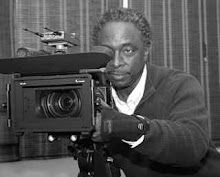
On Tuesday, the Newton Free Library hosted a sneak preview screening of “Trees of My City”  Roberto Mighty’s new film about  family, trees and the meaning of life...and death. Below are quotes from response cards and email...

“Wow. Didn’t know I could be so mesmerized by Trees!”

“Thank you! I love trees. Now I love dead trees.”

“It is splendid and lyrical!”

“Great use of humor!”

“Great integration of family story with the natural world.”

“What a fabulous project! I thoroughly enjoyed your work.”

“I loved the movie. Still thinking about it. I'll be at the January premiere.”

Trees of My City played to a packed house, unusual for a midweek library presentation. The audience, ranging in age from teens to elders, responded to elements of love, obsession, science, spirituality and ecology. Many wrote heartfelt notes to the filmmaker, and responses are still coming in.  

Mark your calendars now for the High-Definition surround sound multimedia installation of Trees of My City at The Arnold Arboretum of Harvard University on Saturday, January 22, 2011.

More audience reactions will be added to this website over the next several days. Some audience members wrote long and thoughtful notes, including suggestions, their own stories about Trees and things they'd like to see changed in the final version.

“Super! Thank you.”

“Very touching.”

“Loved the film - Thank you.”

“Trees, trees, glorious trees!”

“I connected with your sense of awe and spiritual connection towards trees, especially leafless trees.”

“Great Job!  Thanks from the Trees.”

“An unusual idea but it worked.”

“I really like the bird time & tree time segments! That made me think about time differently.”

“Congratulations on the wonderful success of last night's sneak preview.”

Thanks to all who attended and wrote (and are still writing.)

Sunday, July 4, 2010

Sneak Preview August 3rd. Harvard Installation January 22nd.


FOR IMMEDIATE RELEASE
Film Sneak Preview: Trees of My City
NEWTON, Massachusetts: (July 2, 2010) - The Newton Free Library will host a film sneak preview and director's talk  by Roberto Mighty on "Trees of My City", his documentary about dormant, dead and decaying trees, on 

Tuesday, August 3rd from 7pm - 8:30pm.  Address: Newton Free Library, 330 Homer Street, Newton, MA 02459


Trees of My City
Dormancy. Death. Decay. It's All Good.


Trees of My City is an artistic multimedia installation about the hidden beauty and ecological purpose of dormant, dead and decaying trees over four seasons in one American City -- Newton, Massachusetts. 

Through high definition video, unusual photographic perspectives, timelapse, underwater and aerial photography, digital compositing and surround sound audio, audiences will experience trees in unexpected ways and have their consciousness raised about their urban treescapes.

Science Segments
Notable members of the science, naturalist and tree communities provide expert audio/video commentary in Trees of My City. They include: Kevin T. Smith, Ph.D., Project Leader, USDA Forest Service;  Eric J. Olson, Ph.D., Brandeis University; Simon A. Perkins, Field Ornithologist and John DelRosso, Head Arborist, Arnold Arboretum of Harvard University.


Multimedia Installation and Photographic Exhibition
The Arnold Arboretum of Harvard University
125 Arborway Boston, MA 02130-3500
Installation event: January 22, 2011
Photographic Exhibition: January 22nd - March 6th, 2011


Thursday, April 15, 2010

Trees. The Film.

My Trees of My City film/multimedia installation project is about dormant, dead and decaying trees. I spend several hours a week on field excursions, imaging trees with four different types of cameras and a digital audio recorder.


The past four weeks have been a whirlwind. I'm honored to announce that four distinguished experts -- three Scientists and an Arborist -- have signed on to this project to provide commentary and on-camera appearances for the project:

Advisor, Plant Pathology
Kevin T. Smith, Ph.D., Project Leader, USDA Forest Service

Advisor, Arboriculture
John DelRosso, Head Arborist, Arnold Arboretum of Harvard University

Advisor, Ecology
Eric J. Olson, Ph.D., Brandeis University

Advisor, Ornithology
Simon A. Perkins, Mass Audubon Society


In addition, I've been imaging trees in my city, but also in NY, New Jersey, Connecticut and Rhode Island.  TeAr  shows, once again, the repetition of forms in nature, among other things.

However...the onset of Spring has filled me with sadness, as the budding leaves and greenery are already beginning to obscure the architectural structure and stark beauty of each tree.

It took me about a week to pick up the camera again and begin the current phase of the project: Images of death and decay amid Spring's rebirth. Oh, joy....

I've been recording elements for the 5.1 Surround Sound design all over the city, then locked in my studio developing the audio soundscape for the project.  Some of that sound design is hinted at in the film trailer.

I've also been filming time-lapse segments of the trees around my home and have so far geotagged an additional ten remote locations so that followers of this project may go visit the trees, locations and debris featured in the TMC series. Excerpts from these items will be posted to this blog in the coming weeks.  - Roberto
###


Tuesday, March 23, 2010

Trees. Fencing.

MTrees multimedia installation project is about dormant, dead and decaying trees. I spend several hours a week on field excursions, imaging trees with four different types of cameras and a digital audio recorder.


I'm fascinated by trees and fences. Trees are three dimensional free beings who inhabit spherical space -- up, down, forward, back, left, right, visible and concealed, width and depth, positive and negative.


Fences are two-dimensional objects, akin to geometric lines. Fences are relatively fixed. Trees are expansive. Fences are not very flexible. Trees are adaptable. When fences and trees meet, notable events take place, as seen in this triptych - CrabClaw, ChainLink and WiRes.


On this day, I am walking along the Massachusetts Turnpike between West Newton and Newtonville. Lest you think me reckless, I am actually on the adjacent service road, Washington Street. This chain link fence separates the street from the AMTRAK tracks and the highway.


CrabClaw is a chronological narrative. Here's the story I see: There was a tree. Someone erected a fence. The tree grew around the fence. Someone cut the tree down. The claw was too much trouble to remove, so Someone left it there, the tree clutching the fence unto decay, saying "I was here."


ChainLink is a story with a a different outcome: There was a fence. A seed took hold beneath it. The seedling never knew life without the fence. Now the two support each other.


WiRes is more complicated. The telephone pole was once a tree. Its horizontal spars mockingly echo its amputated branches. The above-ground communication wires, connected as they are to other former trees, mimic the under-ground communication wires of the root system which connects all trees to each other.


The tree on the lower right hand corner of the frame sends out its own wires to join in the conversation. But this discussion, in ones and zeroes, may be in a language it will not understand. ###

Friday, March 12, 2010

Trees. United Nations.

MTrees multimedia installation project is about dormant, dead and decaying trees. I spend several hours a week on field excursions, imaging trees with four different types of cameras and a digital audio recorder.


New York City. In two days I am filming in three boroughs -- Manhattan, Staten Island and Queens -- for two projects, Trees and Walkers. The light is fantastic, visibility is endless and the air is dry. Perfect for crisp, high resolution imaging, with as much depth-of-field as my lenses will allow.


On East 43rd street and 1st avenue, I see a planted row of trees from another planet. Or so they seem. Unfortunately, they're behind a chain link fence, so it's tough to get a clear view of them. Looking up, I notice a building that looks familiar...I've seen it before...a row of flagpoles, heavy security presence...Wow. It's the UN


One aspect of Trees is imagining the world from a tree's perspective. UnGnarled is an example of how this tree might see the UN building.


Turning around and crossing the street toward the west side of the island, I see my first architectural love -- that other landmark NY skyscraper, through the eyes of ChrySler.


There are many photographers out on this beautiful day. Canon, Nikon, Olympus, Sony, long lenses, wide-angles. It's a shutterbug orgy in the big apple.  


You can tell the professional shooters. They don't smile when you wave at them. They're too busy trying to get THE SHOT. Me? I'm giddy, like a child. I'll grin at anybody. Everything's right with the world.


But then. I turn to my left and see something pitiful. Someone has planted a lone young tree on a short block, all by itself.  Living thing as decorative object. But trees are  herd animals. Their roots intertwine under the earth, where they touch, receive, give and communicate. Planting one where its roots cannot reach another looks like solitary confinement.
I try to capture that sensation here in WallTree. The cabs heedlessly swoosh in front. The concrete block wall looms behind. The overpass crowds in from the left. A scraggly cousin leans precariously out around the corner, beyond the reach of roots. But this individual is all on its own, already bent and gnarled in its youth.


Too much anthropomorphizing? Not on your life. I know I'm right about this.
I generally prefer not to image trees that are so obviously planted in rows. This stems from my revulsion at the gardens of Versailles, circa 2001. One geometrically staid row of plantings after another, stretching to the horizon. A triumph of man over nature. Yuck. The food was great, though.


But the row of trees in front of the flagpoles in front of the UN building is just too lovely to pass up. DwarfRow shows their delicate structural finery in late winter, before the rouge and eyeliner of later seasons covers them up. Lovely. Just lovely. ###

Wednesday, March 10, 2010

Trees. Trolleys.

My Trees multimedia installation project is about dormant, dead and decaying trees. I spend several hours a week on field excursions, imaging trees with four different types of cameras and a digital audio recorder.

Monday, 4pm. I am on my way to give two back-to-back lectures on high definition videography and audio at the Art Institutes of New England, in Brookline Village. I take the Riverside Line trolley.

The waning light of afternoon casts long, golden shadows on the end-of-winter backyards, woods and wetlands as I ride.

As the trolley hurtles through Newton, my nose is suddenly cold. I realize that it is pressed up against the glass. I am standing, bolt upright, leaning into the door, transfixed by what rushes past -- Trees. Hundreds...thousands of naked, grey, broken, dormant, dead, decaying trees. And tangled undergrowth, thickets, brambles, bushes. All moonscape grey in early March.

The carefully landscaped front yards that I see as I drive around the neighborhoods give way in the rear to dangerously steep hills that descend to the trolley tracks. No one bothers to manicure these grounds.

The Trolley fence is hurricane style. Mile after mile. Couldn't be uglier. Several trees had apparently tried and failed to deal with the metal links. It is a sad sight captured here in FenCed.


Nature takes its course back here. A 60 foot conifer, needles still green, jerked out of the ground by who knows what massive, inexorable force, lies on its side, bloomers showing, root ball humiliatingly exposed to the unforgiving sunlight and drying winds. I am embarrassed for her.

Everywhere there are cracked, bent, breaking and broken bits of trees, as if an actual hurricane had come through. Discarded cleanly sawn limbs and stumps clutter the area closest to the tracks.

The wetlands around the Webster Conservation Area are particularly intriguing. I immediately begin scheming on how quickly I can come back to tramp through these woods with my cameras and audio recorder. I also note several promising stumps that I hope I'll be able to find when I return.

Tuesday morning. 6:19am. Sunrise is at 6:07, so I feel I'll catch the light just right by the time I arrive in Chestnut Hill.

I am imaging sidewalk trees in West Newton Square when a cute little female gets my attention. Wet nose, huge eyes, perhaps 8 inches high at the shoulder. Her owner, a friendly woman in a stylish coat, tells me she is a Cavalier King Charles Spaniel. 

"Shall I pose her next to a tree?" She asks, helpfully. No thanks, no posing. Bending down on one knee, I snap away as the Spaniel dances about. I get a couple of blurry shots. It's a wonderful way to start the day.

TreeGedy is a typical sidewalk tree. I imagine the iron bars are there to protect the tree from humans, but the sight is almost unbearably painful. "We've imprisoned you in order to protect you." 

I decided last week to start photographing the dogs I meet, because I have met dogs on every single one of my Trees excursions. The pattern is usually the same. I am lost in thought, working my camera gear, when I feel a presence. I turn around and there he/she is, four feet, furry and curious.

The owners soon follow, either amused by their dog's interest or apologizing for the intrusion. Either way, conversations ensue. I have scientifically concluded that dog owners are among the nicest people in the world. On the other hand, that's nonsense. I bet Atilla the Hun had a dog, too.


Repeating all the steps I had taken the day before, I take the Riverside Line to the Chestnut Hill stop. It slowly dawns on me that I have no idea how to get back to that felled 60-footer.

I start walking and see no path that goes next to the trolley tracks. High fences everywhere. I consider striding along the railroad bed and then picture myself being arrested by MBTA police. Veto that idea.

I see a small road that might lead behind the tracks. A woman is walking her dog and waves. I wave back. The dog sniffs the air as I approach. She tells me that the "small road" I am on is a private driveway. Whoops. She's pleasant though, and helpful with directions.

I ask for help in finding the way behind the tracks. She directs me to the eastern entrance to the Houghton Garden, buried deep inside a warren of streets. The photo you see here is of the western entrance. By the way, her dog is a Cairn Terrier.  No picture, as I am now getting anxious at the fast rising sun.

I stride off and lope about a half mile, winding back into streets with no sidewalks. I'm beginning to doubt her directions when I suddenly see the entrance, exactly as she described. Thanks, Nice Woman.

The Houghton Garden is a lovely 10-acre Victorian style garden featuring a brook, a pond and a thick stand of rhododendron -- verdant and lush even at this time of year. I stop to record water, bird, insect, squirrel and wind sounds.

The garden is gorgeous, but I'm jonesin' for that deceased conifer, so I move on in what I hope is the direction of the trolley tracks, stopping to notice an empty bottle of Amstel Light rudely thrown underneath a bush. No picture. Too sad.

The sound of a passing trolley snaps me out of my reverie. After  crossing the top of a hill I see a woman standing below with her back to me. I shout out "hello" so I won't scare her by seeming to come out of nowhere. She turns, waves and I see a man and a very well-coiffed grey dog. They are a family. I walk down the hill,  high-resolution camera in one hand and digital audio recorder in the other, headphones in my ears. I imagine I'm quite a sight. Unfazed, they strike up a chat. The dog is a Schnauzer.  Fraulein Schnauzer is not curious so much as annoyed with me. I feel like I am interrupting something.

We all exchange pleasantries and they eventually move off. My theory about nice people and dogs continues to hold true.

For the next two hours, I traipse about the Houghton Garden, the adjacent Webster Conservation Area and the Newton Deer Park.

Fungus is growing everywhere with a vengeance, and the sight of the plump, juicy mushrooms makes me hungry. AwNing, though, looks like a shady overhang in a condo complex.

Mmmm...garlic, onion, olive oil and fresh-picked Newton mushrooms. Except that I never pick anything on these trips. It would seem like a violation.  Not to mention that I don't know which ones are safe. I'm content with taking their images and leaving their bodies intact.

On this day, it's several miles, 4 hours, 82 exposures and many digital audio recordings of the sounds trees hear, plus the sounds trees make as they rub against each other.  I never do find that 60-foot downed conifer, but that's okay.

Utter bliss. ###

Wednesday, March 3, 2010

Trees. Dog day afternoon.

My Trees of My City series is about dormancy, death and decay. I hike around a city filming, photographing and writing about trees and the cycle of demise and regeneration. Follow my meanderings on this geotagged satellite map with embedded video, images and text.

After a week of rain, the sun is shining cheerfully through a partly cloudy sky. But my emotions are mixed as I hike a scant mile from my home to a nearby hilltop stand of maples.

Today I'm backpacking my HD filmmaker's camera, a DSLR, the HDSLR, the digital audio recorder, a tripod, extra batteries and assorted other paraphernalia.

I'd guess I'm schlepping about 50 lbs.

The weight isn't the problem. I am burdened with the thought that I look like a homeless nut job -- laden down with backpack, shoulder bag and tripod as my neighbors flash by in their SUV's, glancing at me with suspicion, derision or sympathy. "Poor bugger must not have wheels," I imagine them thinking.

But it's important for me to walk to these locations. If I drive to a site and then unload my gear, I tend to miss myriad photographic opportunities along the way. Also, hiking -- as opposed to motoring -- allows me to see slowly enough to notice small, exquisite moments, such as a clump of brightly colored fungus at the base of a rotting tree. Oh yeah, baby.

Furthermore, the effort required to make my way on foot to a location is roughly equivalent to the level of intention I will bring to the picture-taking.

So, I labor under 50 pounds of gear, odd glances from the neighbors, and my own rising expectations.

I get to what I call Albemarle Wood, scale a short hill, pass a grotesquely decomposing stump and almost literally stumble over the bizarre sight captured here in StaDium -- a spectacular case of multi-level trunk ring decomposition. Up close, it reminds me of, well, a section of seats at a sports arena. The delicate, paper-like leaves of ring remnants contrast with the almost-decayed-to-dirt layers in between.

About 100 yards away I see what looks like the right wings of two birds who have violently embedded their bodies into this trunk. WoodWings presents their exposed pinions, forever frozen in mid-flight at the moment of impact.

Using a macro setting, I threw the background out of focus to emphasize the frenzied madness of that final suicidal charge. What drove these magnificent fliers to such a catastrophic end?


Reeling back from this sight, the peaceful perspective of DiJon relaxes my eyes. Why Dijon? All I can tell you is that this image makes me think of the French countryside.

Lost in reverie, humming "La Vie En Rose" under my breath, I suddenly become aware of a presence. I turn to see a large, grey, perfectly coiffed Standard Poodle eyeing me with a "what the heck are you doing with MY tree" look.

"Beignet," which is French for fried dough, starts barking. His owner, a friendly German fellow, comes up quickly, shushing Beignet and apologizing to me, his eyes grazing over the small mountain of electronic gear I have transported to the woods.

I start to explain, but he signals that it's not really important. "Isn't it a beautiful day!!," he jovially announces. I break into a broad smile. "Yes, it is. Am I messing with Beignet's tree?" "No my friend. You are messing with his Forest!" We both guffaw.

Beignet  bounds off, the jolly German yodeling behind him. Okay, he wasn't yodeling. But the dude was just so happy that I grin and start stereotyping for all I'm worth.

I go back to setting up the big HD motion picture camera, noticing KryPton along the way. Again, this is an example of layered decay. It reminds me of the depiction of the destruction of the planet Krypton in Christopher Reeve's first (and best) Superman movie.

Again I feel a presence. Looking up, I find myself nose-to-nose with what appears to be a miniature (2 ft tall) Irish Wolfhound. No name, no bark. He is accompanied by a tall Terrier-ish looking companion. The owner soon follows. Turns out we are acquaintances. Pat is a neighbor and a fellow cameraman. We chat amiably about new media stuff. The Hound is actually a greyhound/wolfhound mix. That accounts for the short stature plus the noble bearing. Hmmm. Sounds like my Dad.

On the way home,  with two blocks to go, I see a third man with a dog. Dog day afternoon, indeed. The guy is friendly. Walking, we exchange hellos. I put my hand out to pet his cute little mutt. In a flash, she bites me. Yep. That's right. Friendly Guy's dog bites me on the hand. Luckily I have a thickish leather glove on.

I feel sorry for the owner, who is perplexed and very upset. "Are you alright?" he asks with genuine embarrassment. "Uh, sure, no problem." I respond.  I'm across the street from my house. "Have a nice day," I say, crossing the street. The poor guy looks like he wants to crawl into a hole.

Note to self:  Never assume a dog is friendly because her owner is. Keep your eyes on the dog, dodo.

But it's too nice out to be ticked off. The bite didn't break the skin and I consider myself lucky to have met three cool neighbors on such a beautiful day. ###